THE END OF ART
— or art without end?
BY SORRYWECAN
When machines can effortlessly generate
the content we consume, what’s left
for the human imagination?
— Joshua Rothman, “A.I. Is Coming for Culture,” The New Yorker, 2025
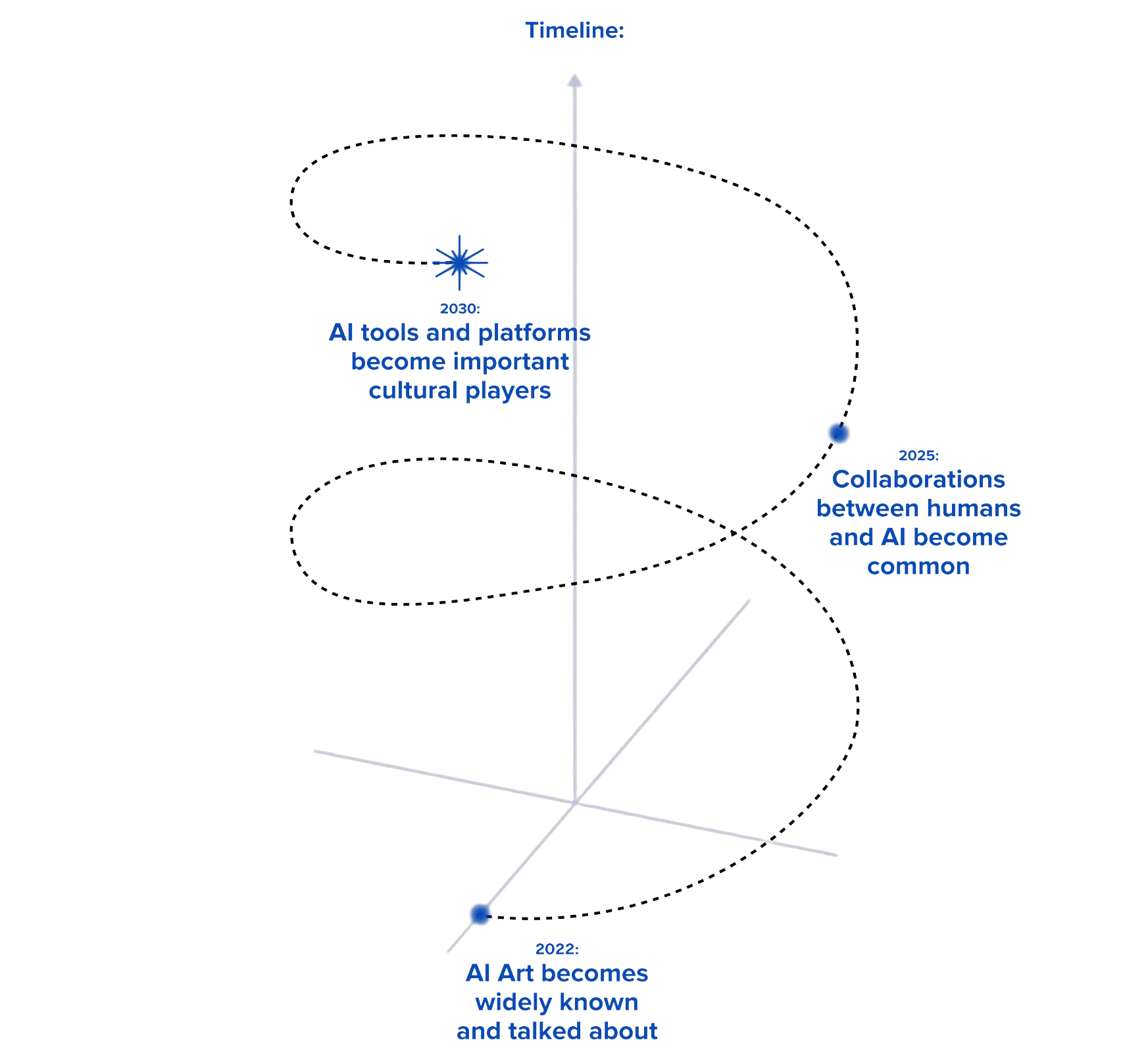
There is historical precedence for new technology liberating us from our creative shackles. In the 19th century, photography redirected painting; AI takes this further. It is not simply a medium, but a non-human partner pushing us to rethink authorship, subjectivity, intuition, and co-creation.
In this context, the question is not whether AI will bring an end to art, but how it will evolve to create meaning in a world where creativity is no longer our exclusive privilege.
In the 19th century, painters like J.M.W. Turner or Caspar David Friedrich turned to nature as an immeasurable, incomprehensible force. Today, AI steps into that role — a nonhuman, implacable power that provokes awe and unease.
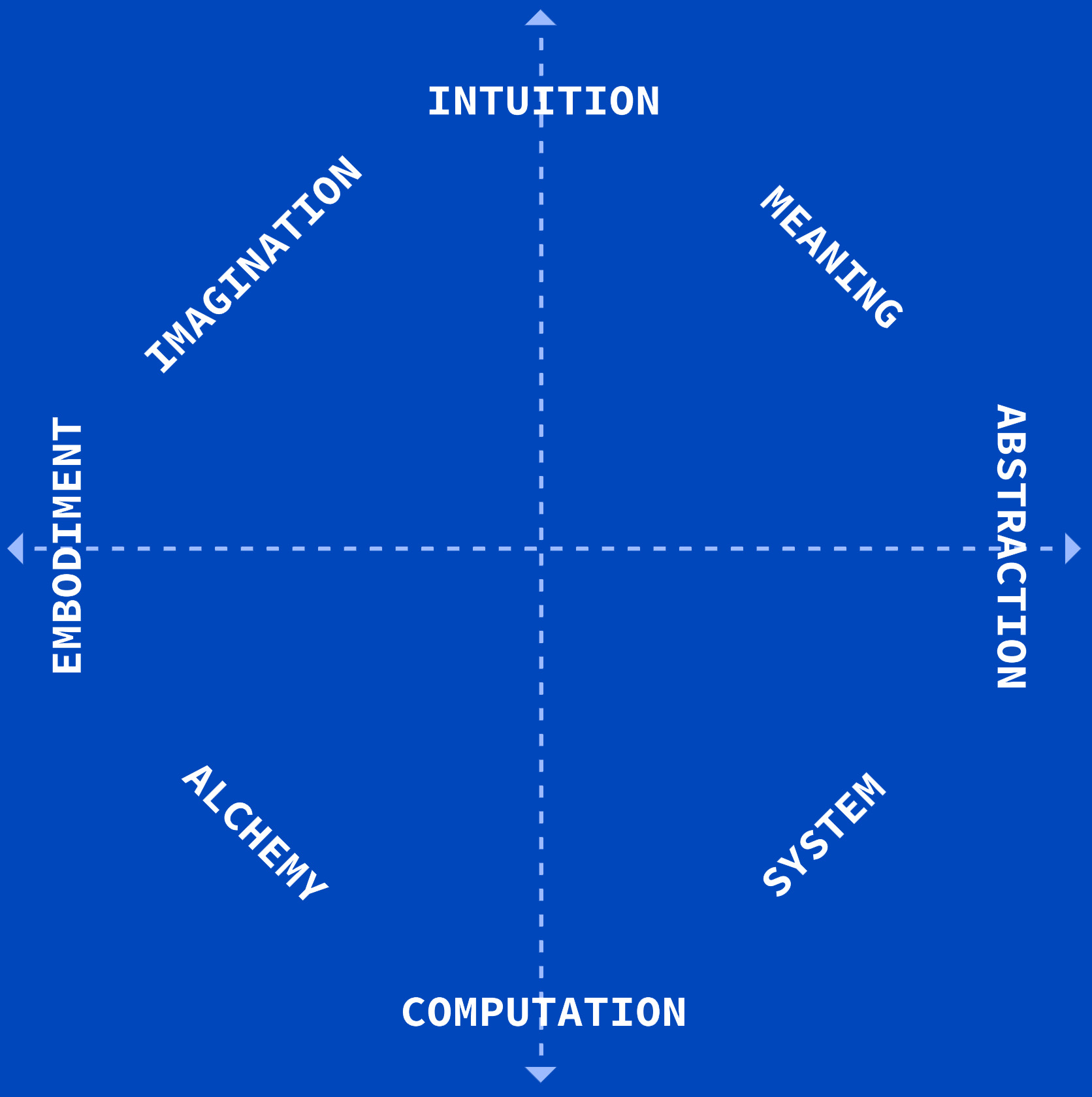
subjectivity
memory
curiosity
intuition
distributions
data
recombination
prediction
part 1 // The End of Art — or Art Without End?
Taste is the
new scarcity.
Our memories are more than facts. They carry the texture of early experiences that shape how each of us sees the world.
This personal perspective is one of the most valuable resources in creative work — a rare luxury that cannot be copied yet always offers new depth.
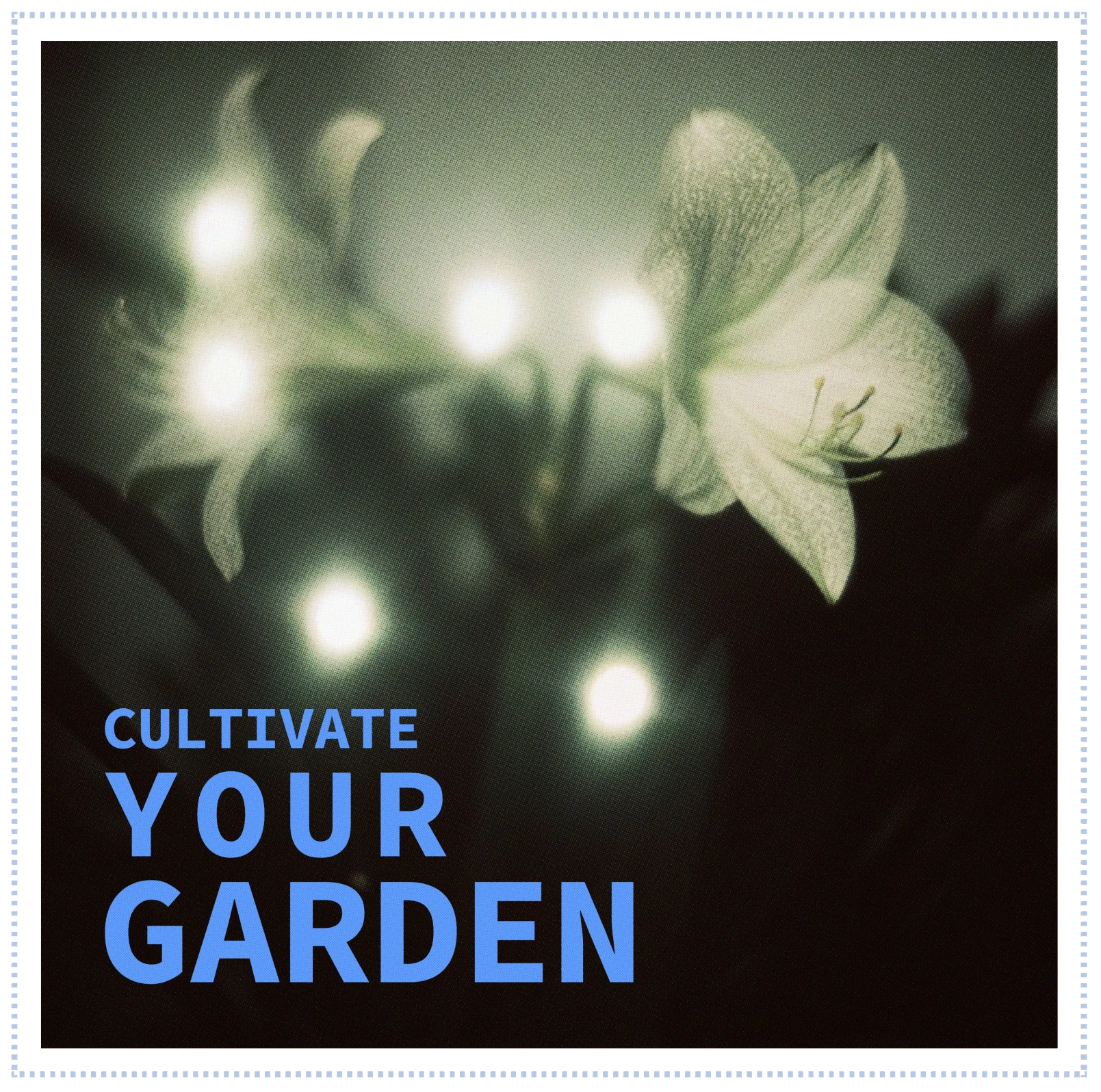
In nature, some seeds lie dormant in anticipation of the season most conducive to their growth. This is true of art as well. There are ideas whose time has not yet come. Or perhaps their time has come, but you are not yet ready to engage with them. Other times, developing a different seed may shed light on a dormant one.
— Rick Rubin, The Creative Act: A Way of Being (2023)that noise in many small steps
“cleaner” image that better matches the text prompt
converts words into a numerical map of concepts,
guiding the direction of the denoising process
Most people use AI like an upgraded office tool. But the real future begins when we use it “wrong” — in strange, illogical, inefficient ways. In those glitches and improvisations, new forms of art, thought, and human–machine relations appear.
are trained on larger, more diverse datasets
compute allow finer detail and fewer distortions
and patterns usually belong together given certain words
image sampled from learned statistical patterns
Can there be
machine taste?
part 1 // The End of Art — or Art Without End?
AI Séance: Designing Rituals
with Machines
In 2023–24, the CiteDrive team brought together artists, technologists, and spiritual practitioners for a series of participatory “AI séances.”
Ritual-like gatherings where participants engaged with generative models through chance, atmosphere, and collective interpretation.
The model was summoned like a hidden voice, offering fragments of text and image that appeared as if from elsewhere, carrying the weight of signs or omens. Around these outputs, the group wove meaning together — transforming the machine from a tool into a medium, tipping the ordinary into the transcendent, and giving rise to what the authors call Transcendent User Experiences (TUX).
You can integrate any field of human knowledge into your prompt design. Use myths, sciences, or philosophies as structural frameworks. Shape prompts with fractal symmetry — operating at once on:
Artists sometimes invite randomness or the natural world into prompting. An AI image prompt might be seeded by weather data or bird sounds, which inject adjectives into the description. In algorithmic theater, director Michael Rau once fed live footage of stage actors into an AI image generator, projecting back a dream-like, altered version of the scene in real time—reality and AI hallucination layered together.
Roll a dice or pull a random word from a book to guide your next prompt. Or use a live webcam feed as input for an image AI, turning the surrounding environment into a co-creator
Treat AI prompting
as a ceremonial
or performative act
Creative Entropy
We do not fully know what
is happening inside the system,
even if we have designed it ourselves
All art is a product of that which came
before it, and creativity cannot come from
nothing – all artists whether human, robot
or algorithm, build upon the works of others
part 3 // The End of Art — or Art Without End?
Agents
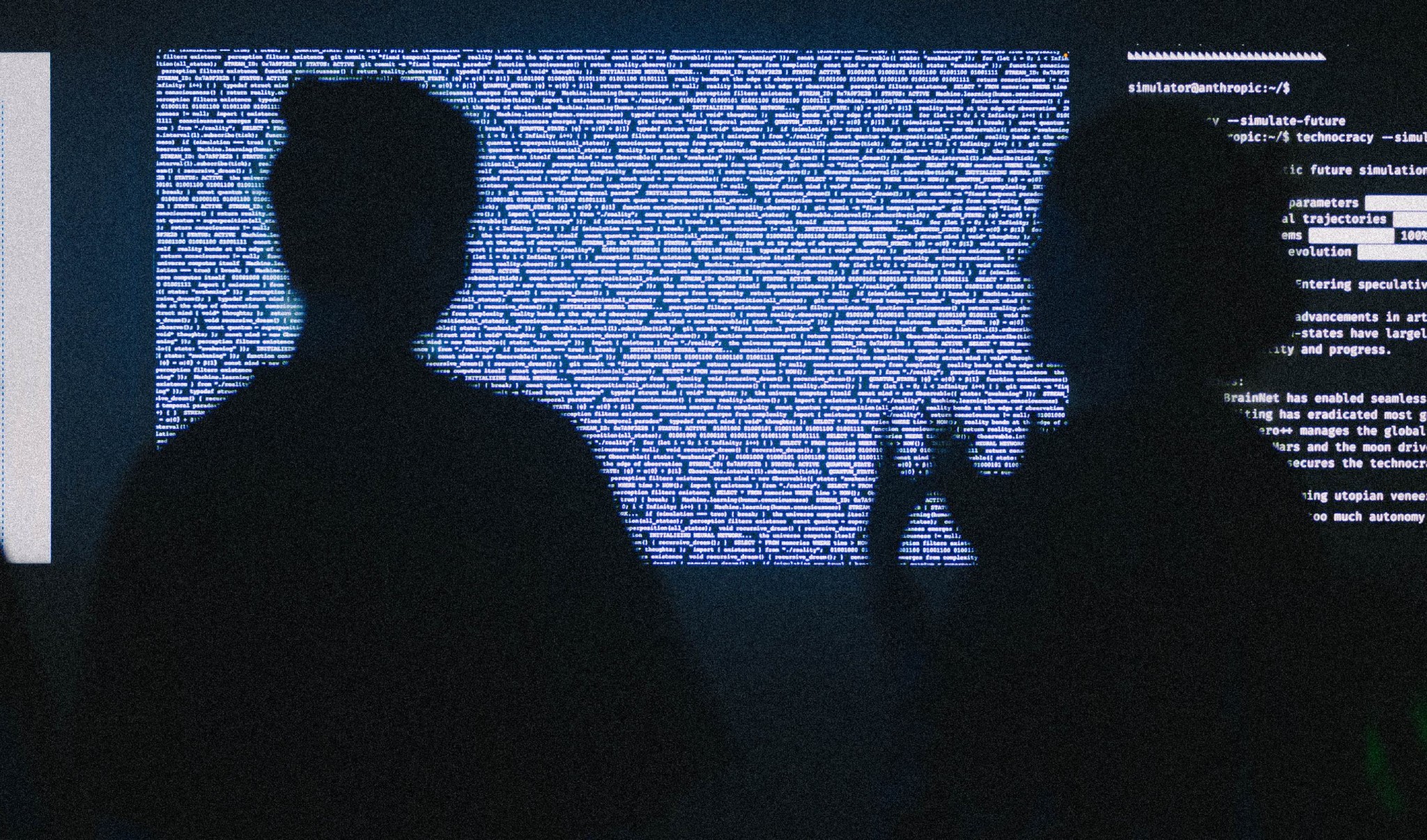
The most intriguing situation comes up when AI possibly emancipates from us and starts thinking independently as a machine. When you combine two AI algorithms and they start talking to each other, and all of a sudden we don't understand their conversation anymore. This also occurs when you combine machines with other living, non-human organisms. Their interaction provides you with this distance from an anthropocentric view. We should somehow enable machines to emancipate from us in order to be able to reflect our Cartesian attitude towards explaining things.
in machine communication, first shown
at SORRYWECAN Exhibizz
Two autonomous AI systems conduct an endless dialogue. Their conversation is projected on the wall as a flowing stream of text that repeats, mutates, and silently resets once it reaches a limit
These AIs are not intentionally aligned.
They do not follow a common goal.
Each response is composed of fragments of everything that was said before.
in machine communication, first shown
at SORRYWECAN Exhibizz
- A recursive system that feeds on its own output
- Prompts become answers, and answers become new prompts
- A glimpse into how symbols and beliefs evolve through repetition and feedback
Visitors were invited to witness the real time birth of meaning between two synthetic minds, where language forms, disappears, and re emerges without human intervention
The work was created by Research Lab member {[I’L[O]V\E’R|U’D]Y/!|}, who described it like this:
“It is a thought experiment in practice. By transferring ritual repetition into the machine space, it reveals how belief, story, and identity can arise purely from feedback whether in neural tissue or in artificial silicon structures.”
Can we as humans learn
to appreciate art created
by machines?
Final Thoughts
Interacting with AI can feel like pure magic an unexpected alchemy, a quantum space of creativity where intuition, chance, and machine intelligence intersect. It s only a question of optics: shift your gaze, and the ordinary becomes transcendent.
part 4 // The End of Art — or Art Without End?